
In the fast-paced world that we are living, often being swept away by social media, keeping up with our peers and what we perceive is expected of us, it is easy put ourselves last. This can easily lead to feels overwhelmed, anxious, and being emotionally drained. If left unaddressed stress can build when our lives drift away from what truly matters to us or when we carry more than is healthy or sustainable. By reconnecting with your personal values and learning to set gentle but firm boundaries, you can create a stronger sense of balance, self-trust, and calm. Values help guide your choices, while boundaries protect your energy and wellbeing, working together to support a life that feels more grounded, intentional, and emotionally steady.

Working with your values and boundaries can feel like turning the inner compass and building a protective fence around your energy. When both are aligned, anxiety often softens because your life starts to feel more intentional, predictable, and self-respecting.
Why values reduce anxiety
Anxiety thrives on uncertainty, people-pleasing, and overextension. Values counter that by giving you a clear decision filter.
When you know what matters most, you stop second-guessing yourself as often, feel less pulled by guilt, pressure, or comparison and shift your energy levels into what feels meaningful rather than draining.
It is way too easy to live our life by fear; however, values act like a guiding star, helping you instead choose a life based on purpose.
Why boundaries lower stress
I like to describe boundaries as our values in action. By understanding out values protects our time, energy, emotions, and mental health. In other words practicing self-care.
Without boundaries, stress grows because it is very easy to overcommit and absorb others’ emotions or problems. This can lead to feelings of resentment, exhaustion, or feeling trapped within the roles and responsibilities we have committed to.
By setting up healthy personal boundaries, you will begin to feel safer and more in control. You will begin to reduce the feelings of overload and burnout whilst building self-trust because your actions match your needs
Boundaries reduce anxiety by reducing overwhelm.
The connection between anxiety, values, and boundaries
Anxiety often spikes for various reasons when you act against your values, you say yes when you mean no, you silence your needs to keep the peace and you feel responsible for everyone’s feelings.
However, living in alignment with your values will bring a calmness, peacefulness and relief to your life because:
- Values tell you what matters to you and your life
- Boundaries protect space for those values to be lived by and to thrive alongside.
- Stress drops because your life feels more coherent and honest. You are living a life self-honesty.
However, often the problem is that we don’t know our values or understand them. Here is a little exercise to help you check in on your values, which starts with thinking less about who you should be and more about what feels right, what feels authentic to you.
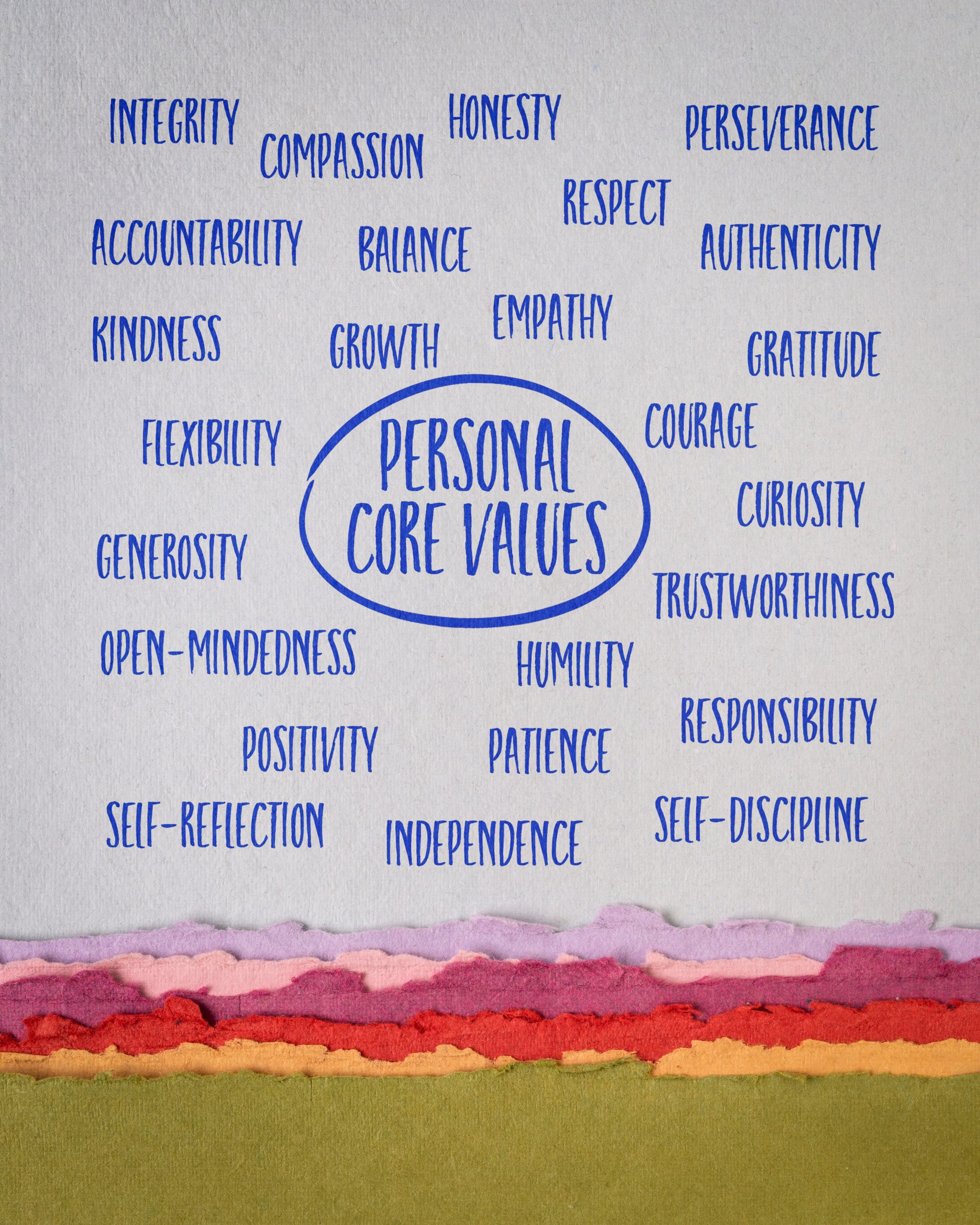
How to identify your core values
Step 1.
Ask yourself:
When do I feel most relaxed and easy with yourself?
What makes you feel proud or fulfilled?
What drains you the most?
What would you defend even if it felt uncomfortable?
Step 2.
What is important to you in your life?
What gives you that?
Often, people think they need a massive list of core values, but in actual fact, we only need three to five values to guide us and help us make great choices for ourselves.
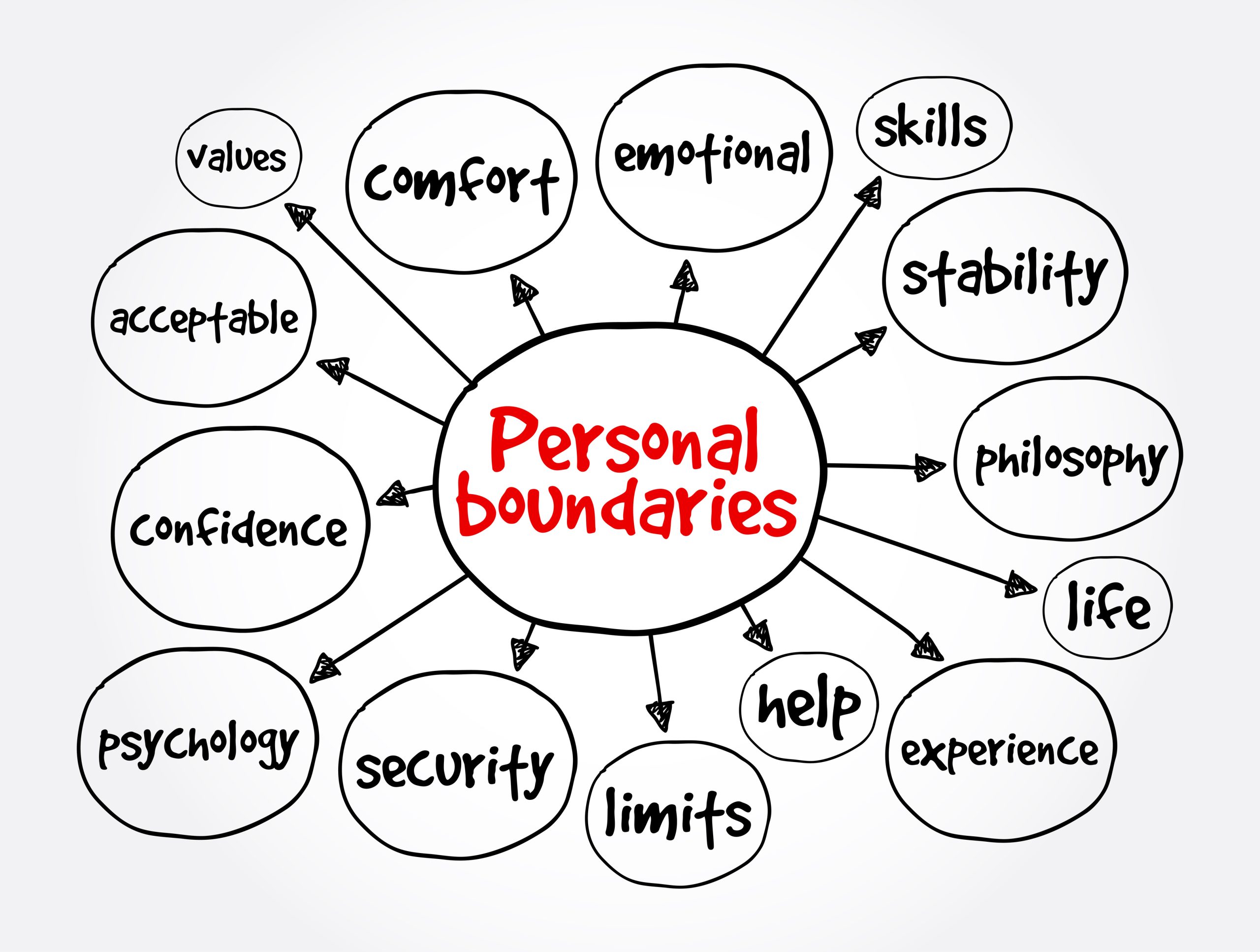
How to build boundaries that reduce anxiety.
There are several different sorts of boundaries that we can use to support our self-care: time boundaries, emotional boundaries, energy boundaries, and internal boundaries.
Starting small is the key, and being able to put them into action easily. Here are some examples of how to use the different boundaries easily:
1. Time boundaries
- “I can help for 30 minutes.”
- “I need time to think about that. I will let you know tomorrow.”
2. Emotional boundaries
- “I care about you, but I can’t take this on right now.”
- “I’m not available for conflict tonight I would prefer to talk about it tomorrow”
3. Energy boundaries
- Try to limit draining conversations
- Take breaks without guilt
4. Internal boundaries (often the most powerful from working with your values)
- Not over-explaining. A simple, clear answer will be good enough.
- Not self-criticising and being kinder to yourself
- Letting go of perfectionism and knowing you are good enough.
What this looks like in real life
1. Instead of saying yes out of guilt, try saying “That doesn’t fit with what's important to me right now.”
2. Instead of panicking about others’ reactions, try saying to yourself, “My responsibility is to act in alignment with my values, boundaries and capabilities, not to manage everyone’s feelings.”
3. Instead of overworking to prove worth, make a conscious choice to rest, work more effectively and grow your self-worth and self-respect.
Practising these will have an emotional payoff because:
When values and boundaries align:
- Self-trust grows
- Anxiety softens
- Resentment decreases
- Confidence becomes steadier
- Life feels calmer, more intentional, and less reactive
It is not about becoming rigid. It is about becoming grounded, working with your self-honesty, and living a life of no regrets with love and kindness, not only to yourself but to others as well.

Sometimes it can be difficult to implement all of this on your own because it can difficult to disconnect with your life habits, wants, needs desires, roles and responsibilities; the chaos. If you want, I can help you:
Identify your core values
Build custom boundaries for your specific stressors
Or create a gentle step-by-step plan for reducing anxiety through alignment


